Treatment · 03
Drifting & adits
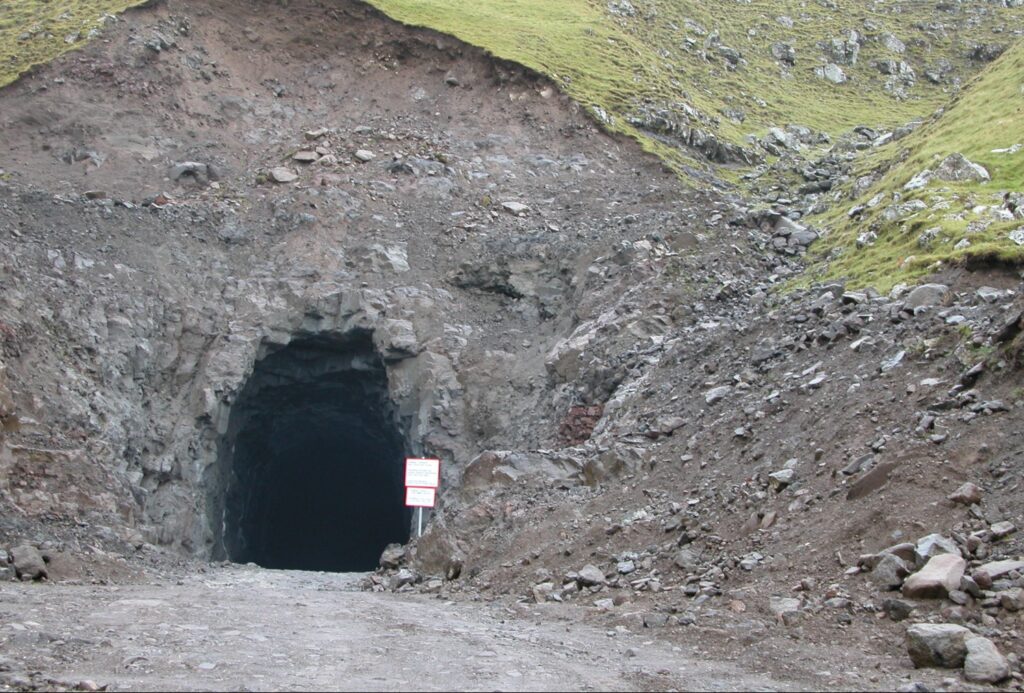
Small tunnels driven into any rock or strata. Hole length and explosive charge are tuned to the type and hardness of rock to get maximum pull recovery per round.
Track record
Where we have driven drifts.
Malari-Jhelum and Jhelum-Tamak, Badrinath, Chhatru in Lahaul & Spiti, Maneri-Bhali, and Shikariabyol under UJVNL. Each of these was driven under different rock conditions, and the charge design changed accordingly.
Blasting
Charge design decides the economics
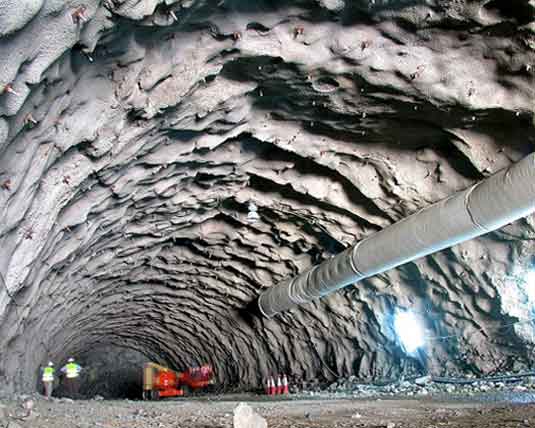
Blasting is where a drift is won or lost. The process fractures material using a calculated amount of explosive so a predetermined volume breaks. Good blast design and execution are essential; poor practice has a severely negative impact on the economics of the work.
Excessive explosive damages rock structures and causes unwanted caving, which drives support costs up sharply. Rock type, density and strength all feed the design, along with the fracture condition of the rock and the water conditions in the hole.
- ANFO — ammonium nitrate and fuel oil
- Slurries
- Emulsions
- Charge tuned per round to rock hardness
Charging method
Solid and liquid, blown together.
Drill holes are charged by blowing or pumping the solid and liquid components of the explosive through individual hose channels, substantially separately but simultaneously, so the components intermix inside the hole as a result of the pumping and blowing. Mechanising the charging cycle this way makes the work faster and considerably safer than hand-charging.
Related services
Next step
Get a method and a rate.
Send us the drift section, length and expected rock and we will come back with a cycle and a rate.