Treatment · 06
Piling
Driven tubular steel piles that transfer building and superstructure load into competent ground. Driving displaces soil rather than removing it, so there is no spoil to dispose of.
What piling does
Ground treatment by displacement.
Piling drives a pile into the ground below ground level. Concrete, timber, steel and bored piles all transfer the building or superstructure load down to competent ground, strengthening the soil so it can carry what you are putting on it. Sheet pile is the exception — it usually takes lateral load and acts as a supporting wall.
Driving piles rather than drilling bores has a real advantage: the displaced soil compresses the surrounding ground, which increases friction against the pile sides and so increases load-bearing capacity. Because driving displaces soil instead of removing it, there is no spoil disposal cost — worth a great deal where the soil is contaminated.
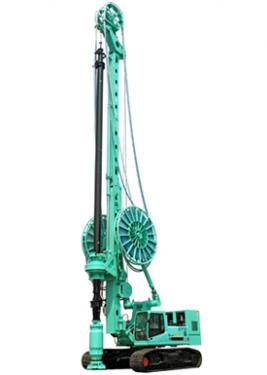
Sections and technique
Open end or closed end
- Steel sections
- Tubes, universal columns (H piles) and rectangular hollow sections. We drive tubes from 350 mm to 1500 mm diameter with wall thicknesses from 7 mm to 25 mm.
- Open-end driving
- Soil enters the bottom of the tube. Where an empty pipe is required an auger clears it after driving; in suitable soils internal cleaning is done by water jetting.
- Closed-end piles
- The bottom is sealed with a steel plate or cast steel shoe. Driving through hard strata, pile toes may take a secondary driving shoe to assist penetration and minimise damage.
- Structural capacity
- Calculated primarily on steel strength, and on concrete strength where the tube is filled.
- Corrosion
- Dealt with by protective coatings, by allowing a sacrificial thickness of steel, or by adopting a higher grade of steel than otherwise needed.
- Splicing
- Most steel tube piles splice readily, giving greater depth capability than a driving rig can otherwise accommodate.
Related services
Next step
Get a method and a rate.
Send us the structure, the loads and the founding conditions.